Building an Indie Game Brand from Scratch
TL;DR: Your brand isn't a logo, it's the accumulated weight of every interaction people have with your studio. Think of your studio as a character with personality traits, a voice, and opinions. Get the basics right: a name you can own across all platforms, a simple logo that works at 16x16, 2-3 colors, and consistency everywhere you show up.
Key Takeaways
- Brand is shorthand for consistency and personality; the signal that says "we take this seriously, and you should too"
- Before committing to a name, check: Google results, .com availability, social handles on all platforms, and trademark conflicts
- Visual identity needs just four things: logo (wordmark + icon), color palette (2-3 colors), typography (heading + body font), and discipline to use them consistently
- Solo devs should decide early: personal brand (ConcernedApe model) for stronger emotional connection, or studio brand (Supergiant model) for durability and scalability
- The Devolver lesson isn't "be weird," it's "be something" and commit to it
Your brand is the reason someone wishlists your second game before seeing a single screenshot. It's not a logo. It's the accumulated weight of every interaction someone has with your studio, from your Twitter posts to your press kit to the way you handle a bug report on launch day. Most indie devs skip branding entirely and wonder why nobody remembers their studio name. This guide fixes that.
Table of Contents
- Branding Is Not a Logo
- Your Studio as a Character
- Naming Your Studio (Without Shooting Yourself in the Foot)
- Visual Identity on a Budget
- Your Studio Website: What You Need, What You Don't
- Social Media Identity
- Devlogs as Brand Building
- Solo Dev Brand vs. Studio Brand
- How Brand Carries Across Multiple Games
- Your Press Kit as Brand Expression
- Community as Brand
- Brand Mistakes That Kill Studios Before They Start
- The Devolver Effect: Personality Beats Polish
- Your Branding Checklist (Zero Budget Edition)
Branding Is Not a Logo
Let's get this out of the way. When most indie devs hear "branding," they think about spending three weeks picking fonts. That's not what we're talking about.
Branding is the answer to a question players don't consciously ask: "What kind of studio is this?" It's the vibe people get when they visit your Steam page, scroll your Twitter feed, and land on your website. It's whether they trust you enough to spend $20 on something you made.
For a 3-person studio, brand is shorthand for consistency and personality. That's it. You don't need a brand agency. You don't need a "brand essence wheel" or a positioning statement written in corporate-speak. You need to decide who you are and then show up the same way every time.
Michael Schade from Rockfish Games (Everspace) put it well: "Having a proper press kit shows professional intent, even if it is just a solo dev game." That professional intent IS your brand. It's the signal that says "we take this seriously, and you should too."
Think about it from a journalist's perspective. They receive 100+ pitches a day. Two games land in their inbox, similar genre, similar quality. One has a coherent studio identity, consistent screenshots, a clear voice in their pitch email. The other is a Gmail from "coolgamestudio2024" with a Google Drive link. Which one gets the click?
Your Studio as a Character
Here's the most useful mental model for indie branding: your studio is a character. Characters have personality traits. They have a voice. They have opinions. They have a look.
You don't need to invent this from scratch. It already exists. How do you talk about your game when you're excited about it? What developers who've built recognizable brands consistently report is that authenticity matters more than polish—forced personality reads as corporate, while genuine quirks become memorable. What kind of games do you make, and why those games? What do you care about that other studios don't? The answers to those questions are your brand.
Some examples of studios that figured this out:
Supergiant Games is the studio that treats every game like it's their magnum opus. 25 people, five games over 16 years. Bastion, Transistor, Pyre, Hades, Hades II. Each one visually distinct, but all share the same DNA: extraordinary art direction, a killer soundtrack by Darren Korb, and writing that respects the player's intelligence. Their brand isn't a color palette. It's a quality bar. When Supergiant announces something new, people pay attention because the studio's track record IS the marketing.
Team Cherry went the opposite direction: intentional mystery. Their website is sparse. Their blog posts are infrequent and mostly patch notes or major reveals. They barely market. But Hollow Knight sold over 15 million copies, and when Silksong was in development, the internet obsessed over every crumb of information. Their brand is "we don't talk much, but when we do, it matters." The scarcity made every announcement feel like an event.
Devolver Digital is, well, Devolver. We'll get to them later. They deserve their own section.
The point: each of these studios has a distinct personality, and that personality didn't come from a branding workshop. It came from knowing who they are and being consistent about showing it.
Naming Your Studio (Without Shooting Yourself in the Foot)
Your studio name is the one branding decision that's genuinely hard to change later. Everything else, the logo, the colors, the website, can evolve. But once people know your name, you're stuck with it.
Common naming mistakes:
Too generic. "Blue Sky Games," "Pixel Studios," "Indie Works." Search for any of these and you'll find 40 studios with the same name. If someone can't Google your studio and find you on the first page, your name is working against you.
Too clever. Names that are puns, inside jokes, or require explanation don't travel well. If a journalist has to ask how to spell your name during an interview, you've created friction where you didn't need it.
Impossible to claim. Before you fall in love with a name, check: Is the .com available? Can you get @yourstudioname on Twitter, Instagram, YouTube, and TikTok? Is there a trademark conflict? Do this FIRST. Many devs pick a name, build an identity around it, then discover someone else owns the domain.
In practice, developers who skip this check often discover conflicts months into their marketing campaign when it's too painful to rebrand. The availability check process:
- Search the name on Google. If the first two pages are full of other things, pick a different name.
- Check domain availability. A .com is still the default expectation. The .gg domain is popular in gaming and works well, but .com is safest.
- Check social handle availability across every platform you'd use. Same handle everywhere. No underscores, no numbers, no "official" suffix.
- Do a basic trademark search. You're not a lawyer and this isn't legal advice, but the USPTO search tool is free and takes five minutes.
- Say it out loud. Can someone hear it at a convention and spell it correctly? If not, reconsider.
Names that worked well: "Supergiant Games" is descriptive and searchable. "Team Cherry" is simple, memorable, and unique enough to own search results. "Yacht Club Games" signals fun and is impossible to confuse with anything else. ConcernedApe (Eric Barone's handle for Stardew Valley) is quirky and unforgettable.
Visual Identity on a Budget
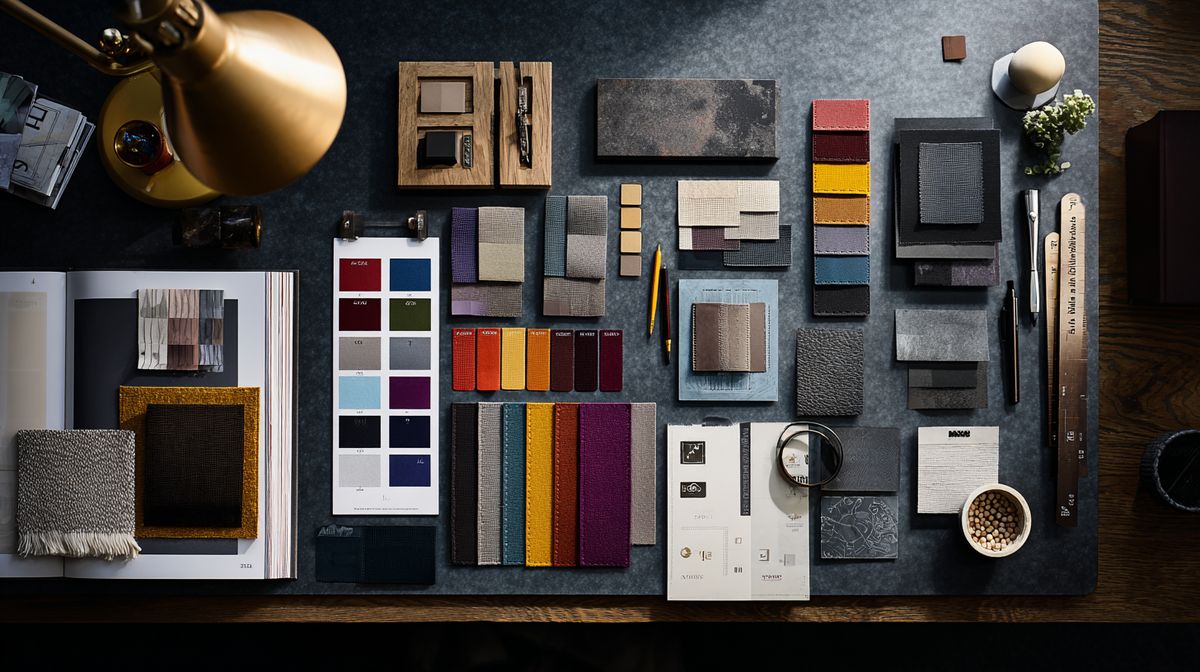
You don't need a $10,000 brand identity package. You need four things: a logo, a color palette, typography choices, and the discipline to use them consistently.
Logo: What You Actually Need
Two versions. A wordmark (your studio name in a specific typeface, maybe with some customization) and an icon (a simple symbol that works at tiny sizes). That's it.
Your icon needs to be legible at 16x16 pixels (favicon size) and look good at 128x128 (the size of a WordPress plugin icon or a social media profile picture). If your logo has fine details that disappear at small sizes, simplify it.
You need the logo in: full color on a transparent background (PNG), monochrome/white version for dark backgrounds, and ideally an SVG for print and infinite scaling.
Where to get one:
If you can draw, make it yourself. Figma is free and excellent for logo work. Canva works in a pinch. Keep it simple. The Stardew Valley logo is just a custom wordmark with some leaf ornamentation. Team Cherry's is a small cherry icon. These aren't complex pieces of design.
If you can't draw, commission one. ArtStation and Twitter are full of freelance illustrators. Expect to pay $100-500 for something decent from a freelancer. Fiverr is an option, but the quality is wildly inconsistent. You'll spend more time filtering bad work than you save in money. If you go the Fiverr route, look for sellers with hundreds of reviews and a portfolio that matches what you want.
Design contests (99designs, etc.) are controversial for good reason, since most designers hate them. But they exist. Your call.
Color Palette: Pick 2-3 and Stop
Pick a primary color, a secondary color, and a neutral. Use them everywhere: your website, your Steam page, your social headers, your press kit, your Discord server banner.
Dark mode matters. Most gaming platforms, Discord, Steam, most gaming websites, use dark backgrounds. If your primary brand color is a light pastel, make sure you have a dark-background version that still looks good.
Where to find palettes: Coolors.co generates random palettes. Adobe Color lets you extract palettes from images. Or just pick colors from games and art you admire. Nobody owns a hex code.
Typography: One Heading Font, One Body Font
Google Fonts is free, reliable, and gives you hundreds of options. Pick a heading font with personality and a body font that's clean and readable. Done.
Avoid overly decorative fonts for body text. Your descriptions, blog posts, and press kit copy need to be readable first, stylish second. Save the funky stuff for headings and your logo.
Write down what fonts you chose. Seriously. Put it in a text file. "Headings: [Font Name]. Body: [Font Name]. Sizes: H1 at 32px, H2 at 24px, body at 16px." Future you will thank present you when you're building your fifth marketing asset and can't remember what font you used on the website.
Your Studio Website: What You Need, What You Don't
Alice Bell, formerly of RPS, said it plainly: "A bunch of indie dev websites are just single page placeholders saying 'We're PixelWool studios!', and from my point of view that's kind of useless."
She's right. A website that's just your logo and a "coming soon" message actively hurts you. Journalists who search for your studio will find it, see nothing useful, and move on.
What your site needs (minimum):
- Your current game, front and center. Screenshots, a trailer embed, a link to your Steam page or wishlist button. This is what 90% of visitors are here for.
- An about page. Who you are, what you're about. Two paragraphs. Include a team photo if you're comfortable with it. Journalists use this.
- A press kit page. If you're using presskit.gg, this lives right on your own domain. Screenshots, logos, descriptions, key art, downloadable assets. This is the page that makes a journalist's job easy.
- Contact info. An email address. Not a contact form that might break. Not a Discord invite with no other option. A real email address.
What you don't need:
A blog you'll never update (an abandoned blog is worse than no blog). A "careers" page when you're two people. A detailed company history when you've shipped zero games. An e-commerce store for merch you don't sell yet.
The website-press kit connection:
When your press kit lives on your own domain (yourstudio.com/press), every backlink from articles about your game strengthens your site's domain authority. Every Google search for your game name can lead to your site, then to your Steam page. This is the SEO advantage of self-hosting your press kit instead of using a third-party hosted tool. Your website and your press kit reinforce each other.
WordPress powers 43% of the web and is a solid foundation for a studio site. It's free, hosting starts at $5/month, and tools like presskit.gg plug right into it. You don't need a custom-built site. You need a functional one.
Social Media Identity
Consistency across platforms. Same name, same avatar, same header image, same general tone. When someone finds your studio on Twitter and then joins your Discord, it should feel like the same place.
The basics:
- Same handle on every platform you use. @YourStudio everywhere. If the handle isn't available somewhere, rethink the name before you commit.
- Same profile picture everywhere. Your logo icon. Not a screenshot from your game (that changes), not a meme (that ages), your logo.
- Headers and banners sized for each platform. Twitter header is 1500x500. Discord banner is 960x540. YouTube banner is 2560x1440. Make one wide image and crop it for each.
- A consistent bio format. "[Studio Name]. Making [Game Name]. [Platform/Wishlist Link]." Short. Functional.
What platform to focus on:
You don't need to be everywhere. Pick two. Twitter/X is still where game journalists and developers hang out. TikTok is where viral moments happen (YAPYAP got 1.5 million views on their announce video). YouTube is where long-form content lives. Discord is where your community lives.
Pick the two where your audience already is and do those well. A dead TikTok with three videos from six months ago is worse than no TikTok at all.
Devlogs as Brand Building
Devlogs are the single most underrated branding tool available to indie devs. Every devlog, whether it's a tweet thread, a YouTube video, a blog post, or a Steam community update, is an opportunity to show people who you are.
The behind-the-scenes approach works because it builds something money can't buy: a feeling of investment. When someone follows your development for months, watches you struggle with a mechanic, celebrates when you nail it, they're no longer a potential customer. They're a fan. They'll wishlist without being asked. They'll tell their friends.
What makes devlogs work as branding:
They show your process, and your process is unique. Nobody else is building your game. The specific problems you solve, the art you create, the bugs you squash, that's all content that only you can make. It's also content that's impossible to fake.
They give your studio a human face. People connect with people, not logos. A devlog where you explain why you redesigned a character or show your whiteboard covered in level design notes makes your studio feel real.
They create a cadence. Regular updates (even small ones) train people to check in on you. That's brand loyalty built from scratch, with zero ad spend.
The consistency trap:
Start a devlog schedule you can actually maintain. Weekly is great if you can swing it. Biweekly is fine. Monthly works. What doesn't work is posting five devlogs in your first month and then going silent for three months. An irregular cadence is worse than a slow one.